Sequoia's Secret

Liam Reilly
| 03-07-2026
 · Plant Team
Flames moving through a Sierra Nevada forest, and at the center of the haze, a wall of reddish-brown bark standing unmoved.
The fire burns around the base, chars the surface, and moves on. The giant sequoia barely notices. It's been doing this for thousands of years.
The Bark Is the First Line of Defense
A mature sequoia's bark can reach two feet in thickness — sometimes more. That's not an exaggeration. It's a multi-layered structure of dead cells packed with air pockets and tannins. The air acts as insulation, slowing heat transfer dramatically before it can reach the living tissue underneath. The tannins are chemical compounds that make the bark less flammable and resistant to decay.
Safe and effective methods to tackle common plant pests and diseases, from your pantry to the garden center.
Why does mud never stick? Nature’s smartest clean surface may surprise you!
A Simple Guide to Choosing Beautiful Sunflowers for Every Garden Space
Want fresher air and a calmer home? These beautiful plants may do more than you think!
Can succulents truly thrive indoors with limited sunlight? Practical care tips to keep them healthy, compact, and vibrant at home.
How Can Natural Floral Style Change Your Space? Discover the Beauty of Free-Flowing Blooms!
When fire moves through, the outer bark may char, but that charred layer actually forms an additional protective barrier. The internal cambium layer — the living ring that transports nutrients and enables growth — typically remains undamaged even during intense burns.
Self-Pruning Keeps the Crown Safe
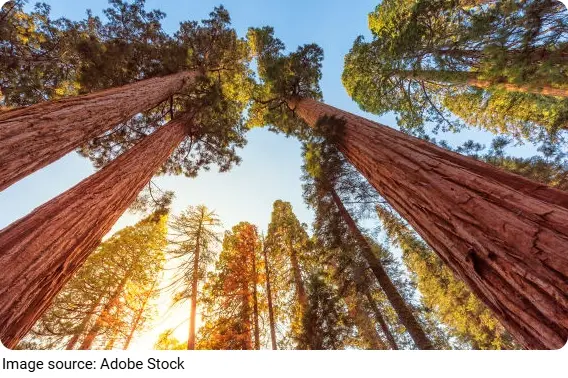
Walk up to a mature giant sequoia and look up. The lowest branches are far overhead. That's not an accident. As these trees grow, they shed their lower branches in a process called self-pruning. The result is that there are no ladder fuels — no pathway for ground-level flames to climb up into the canopy.
Most wildfires that burn through sequoia groves stay close to the ground, and the crown remains completely out of reach. Without lower branches to carry fire upward, the tree's foliage and seed-producing cones stay protected high above the heat.
The Cones Need Fire to Open
Here's where the relationship between sequoia and fire becomes genuinely unusual. The cones of a giant sequoia are serotinous — they remain closed under normal conditions and require heat to open and release their seeds.
A ground fire passing through a grove triggers the cones to drop their seeds at exactly the right moment, onto a seedbed that the fire has already prepared: competing vegetation cleared away, mineral soil exposed, nutrients released from burned organic matter back into the ground. The sequoia doesn't just survive fire. It uses fire to reproduce.
Resprouting After Damage
Even when fire damages a tree, sequoias have one more tool available. Dormant buds are stored beneath the bark at the base of the trunk. After a damaging fire, the tree can reallocate resources from its root system to stimulate new shoot growth from these buried buds. Recovery can begin within weeks or months depending on the severity. It's a regenerative fallback that allows even significantly damaged trees to return.
When Fire Becomes Too Much
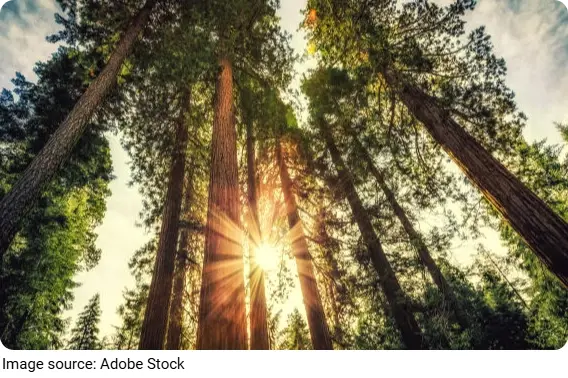
The system works — until it doesn't. Decades of fire suppression across many forests allowed fuels to accumulate: dead wood, dense undergrowth, years of unburned material piling up on the forest floor. When ignition finally happens in those conditions, the resulting fire burns far hotter and higher than sequoias evolved to handle. Crown fires — where flames reach the canopy itself — can destroy even the largest trees.
It's a reminder that the sequoia's fire adaptation was built around regular, low-intensity burns, not the catastrophic events that result from a century of suppression. Prescribed burns and careful fuel management are now understood as essential to keeping these ancient trees alive.