David's Deer: 5 Facts!

Finnegan Flynn
| 24-09-2026
 · Animal Team
Hello, Readers! Have you ever heard of a deer that vanished from its native homeland yet managed to survive against incredible odds? Père David's deer (Elaphurus davidianus) has one of the most remarkable comeback stories in the animal kingdom, thanks to a small captive population and decades of international conservation efforts.
Beyond its dramatic history, this rare species stands out for its unusual appearance, unique behavior, and fascinating adaptations. Let's explore five surprising facts that make Père David's deer one of the world's most extraordinary mammals.
1. It Was Saved Because of a Single Imperial Hunting Park
One of the most astonishing facts about Père David's deer is that the entire modern population traces back to a herd once kept inside the Imperial Hunting Park near Beijing during China's Qing Dynasty. By the late 19th century, the species had already vanished from the wild due to habitat loss, expanding agriculture, hunting, and flooding.
No bamboo, no red pandas? The answer may surprise you!
Why Do Macaws Live So Long? Discover How Their Unique Bodies and Smart Behaviors Help Them Reach Amazing Ages!
Discover The Great Egret: How Its Snowy Feathers And Clever Hunting Skills Create A Beautiful Life Near Water
From Tiny Cubs to Grassland Leaders: The Incredible Growth Journey Every Lion Experiences in the Wild!
Why Do Dolphins Keep Jumping? Discover the Hidden Reasons Behind Their Amazing Ocean Leaps!
How Do Reindeer Travel Thousands of Miles? The Amazing Secrets Behind Their Seasonal Migration Revealed!
The deer remained hidden from Western science until 1865, when French missionary and naturalist Armand David observed them inside the royal enclosure. Since ordinary visitors were forbidden from entering the park, the species had remained unknown outside China. David obtained several specimens for scientific study, and one of the deer was later named after him.
Disaster struck in the 1890s when severe flooding damaged the park's walls, allowing many deer to escape, while others were taken by hungry local residents. A few years later, widespread conflict and instability led to the loss of the remaining animals in the park. Fortunately, several deer that had previously been sent to European collections survived, preventing the species from disappearing forever.
2. Every Living Père David's Deer Descends from Just a Handful of Ancestors
Modern Père David's deer represent one of conservation biology's greatest recovery stories. After the population disappeared in China, only about 18 surviving individuals remained in European zoos and private collections.
The turning point came when the 11th Duke of Bedford, Herbrand Russell, gathered these scattered animals at his estate, Woburn Abbey in England. Through careful breeding over many decades, the herd gradually increased despite the extremely limited genetic diversity.
Today, thousands of Père David's deer exist in managed populations around the world. Although scientists continue to monitor their genetic health because of the species' narrow ancestral base, the breeding program has been remarkably successful. It stands as one of the earliest examples of coordinated international conservation preventing the complete extinction of a large mammal.
3. Its Appearance Looks Like Several Animals Combined
Père David's deer has puzzled observers for centuries because it possesses a combination of features rarely found together in one species. Traditional Chinese descriptions famously compared it to several different animals, leading to the nickname "the four unlikes."
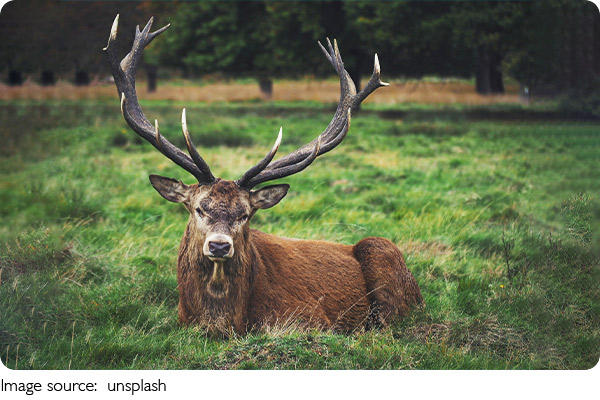
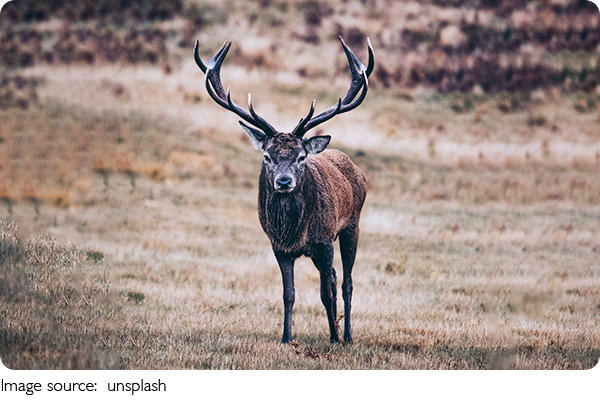
Its long tail resembles that of a donkey rather than a typical deer. The broad hooves are unusually large and spread widely, making them well suited for walking across muddy wetlands. The antlers are equally distinctive. Mature males often grow long, backward-sweeping antlers, unlike the forward-pointing antlers seen in most deer species.
During periods of excellent nutrition, some males have even been observed growing a second set of antlers within the same year after shedding the first. Their body proportions also differ from those of forest-dwelling deer. Long legs and sturdy bodies allow them to move efficiently through marshes, shallow water, and soft ground where other deer might struggle.
4. It Is Exceptionally Adapted to Wetland Life
Unlike many deer that prefer forests or mountainous landscapes, Père David's deer evolved in floodplains, marshes, and seasonally flooded grasslands along China's major river systems.
Its broad hooves function almost like natural snowshoes, spreading its weight over soft, waterlogged soil. This adaptation reduces sinking while the animals forage through reeds, aquatic plants, grasses, sedges, and young shoots.
The deer are also confident swimmers. They readily enter rivers, ponds, and wetlands to escape heat, avoid insects, or reach fresh vegetation. During hot weather, they may spend extended periods standing in shallow water, behavior that is less common among many other deer species.
This close relationship with wetlands means that conserving suitable habitat is just as important as protecting the animals themselves. Healthy marsh ecosystems provide food, shelter, and breeding areas essential for their long-term survival.
5. It Returned to China After Being Extinct There for Nearly a Century
Perhaps the most inspiring chapter of the species' history began in the 1980s, when China initiated ambitious reintroduction programs using deer descended from the Woburn Abbey herd.
Animals were released into carefully managed nature reserves, including protected wetland habitats where environmental conditions closely resembled the species' historical range. Conservationists monitored breeding success, disease, habitat quality, and population growth to improve the chances of long-term establishment.
The results have been encouraging. Several reintroduced populations now breed successfully, and some reserves support hundreds of individuals living under semi-wild or wild conditions. While the species still depends on ongoing conservation management and habitat protection, it has transformed from being extinct in its homeland to once again becoming part of China's native wildlife.
This recovery demonstrates that carefully planned international cooperation, scientific management, and habitat restoration can reverse even the most dramatic wildlife declines.
Père David's deer is far more than an unusual-looking deer with an interesting name. It represents one of the world's most remarkable conservation achievements—a species rescued from complete extinction through international collaboration, dedicated breeding programs, and habitat restoration.