Hidden Canyon

Owen Murphy
| 05-08-2026
 · Travel Team
Reflection Canyon is one of Utah’s most unforgettable viewpoints, but reaching it requires more planning than a normal sightseeing stop.
Located in the remote Escalante area near Lake Powell, this curved canyon rewards prepared travelers with a dramatic landscape where red rock lines meet deep blue water.
For Lykkers, the important question is not only whether Reflection Canyon looks beautiful. The real question is whether the journey matches your travel style. This is not a quick roadside attraction. You need a suitable vehicle, enough water, navigation preparation, and a realistic schedule. A well-planned visit usually requires 2 days, including the long drive, overnight stay, and hiking time.
Want easy trip ideas? Make every day in Fiji full of unforgettable moments!
One Walk, Seven Wonders: Discover Manila's Most Breathtaking Historic Attractions!
Think You Know Libya? These 7 Breathtaking Tripoli Attractions Will Completely Change Your Mind!
Can Zimbabwe's capital surprise you beyond its reputation?
Can one Pacific capital show the real soul of Samoa?
Can Johannesburg reveal a side most travelers miss?
Decide If Reflection Canyon Fits Your Trip
Reflection Canyon is perfect for travelers who enjoy remote landscapes and quiet exploration. However, it is not the right choice for everyone. Understanding the difficulty before going will save you from a disappointing experience.
Know the distance, time, and physical demand
The classic hiking route is about 16 to 18 miles round trip, depending on the exact route chosen. The trail is not a developed national park path. Sections may require route finding across open desert terrain, so offline maps, GPS devices, and basic navigation skills are strongly recommended.
Most visitors need around 7 to 10 hours for the full hike, but many experienced travelers split the trip into two days. A common plan is:
Day 1:
• Drive to the trail area
• Set up camp nearby
• Start early the next morning
Day 2:
• Hike to the viewpoint
• Spend time photographing the canyon
• Return before sunset or continue overnight depending on the plan
The biggest challenge is not only the distance. There is no reliable water source along the route, so travelers must carry their own supply. Desert conditions can become dangerous quickly, especially from June to August when daytime temperatures may become extremely high.
For most visitors, the best months are March to May and September to October. These periods offer cooler hiking conditions. Summer trips require much more preparation because heat exposure becomes a major factor.
Choose the right transportation and base location
The nearest practical town is Escalante, Utah. Many travelers use it as their preparation base because it offers accommodation, food supplies, and fuel.
Escalante to the Reflection Canyon area requires a long drive on Hole-in-the-Rock Road, a remote route with rough sections. The road conditions change after weather events, so a high-clearance vehicle is strongly recommended. Travel time from Escalante to the trail area may take around 2 to 3 hours depending on road conditions and stops.
A realistic budget plan:
• Hotel in Escalante: usually around $100 to $200 per night depending on season and availability
• Fuel: approximately $30 to $80 depending on vehicle and driving distance
• Food supplies: around $20 to $50 per person for a simple hiking plan
• Camping: dispersed camping options may be available in the surrounding public land areas, but visitors should check current local rules before staying overnight.
Avoid planning the hike as a same-day visit from larger cities. Driving from places such as Las Vegas or Salt Lake City already requires several hours, leaving too little time for a safe desert hike.

Make the Journey Work Smoothly
The beauty of Reflection Canyon comes from its isolation. That also means small mistakes become bigger problems. A successful visit depends on preparation more than expensive equipment.
Follow a simple arrival-to-exit route
A practical itinerary looks like this:
Day before hiking:
• Arrive in Escalante
• Fill the fuel tank
• Buy all food and water
• Download offline maps
• Check weather conditions
Hiking day:
• Start early, ideally around sunrise
• Carry enough water and snacks
• Leave enough daylight for the return journey
• Avoid rushing for sunset photos if navigation becomes difficult
After finishing:
• Return to Escalante
• Rest before a long drive to the next destination
Many travelers underestimate the return section. The viewpoint feels like the main goal, but walking back through open desert can be physically demanding.
Capture the canyon at the right moment
Photography is one of the main reasons people visit Reflection Canyon. Early morning and late afternoon usually provide softer light and stronger colors across the rock formations.
Bring:
• Extra camera batteries
• A wide-angle lens if using a camera
• A lightweight tripod if photography is a priority
• Sun protection and enough water
Remember that the famous curved view requires reaching the overlook area. The final reward comes only after the preparation and effort.
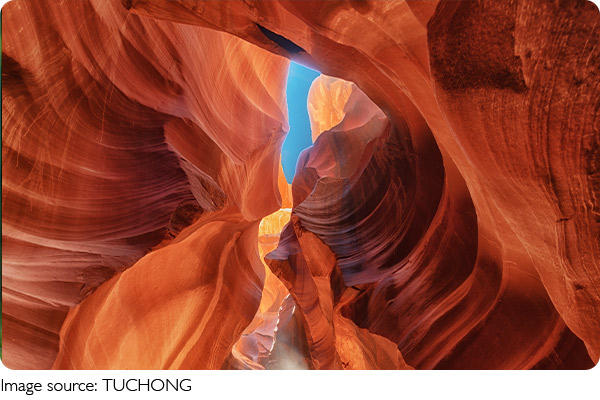
Reflection Canyon is not a destination to quickly check off a list. It is a carefully planned desert journey where transportation, timing, and physical preparation decide the quality of the experience. For Lykkers who are ready for a remote adventure, two well-organized days can create one of Utah’s most memorable travel stories.