Coral Heat Alert

Santosh Jha
| 23-10-2026
 · Animal Team
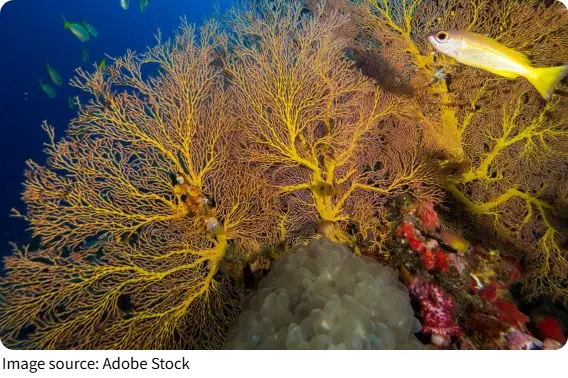
Coral reefs may look still and sturdy, but they are actually very sensitive living systems. When seawater gets too warm, even for a short period, corals can slip into serious stress. One of the clearest signs is coral bleaching, a process that turns bright reefs pale and signals that ocean conditions have moved beyond a safe range.
These algae give corals much of their color and also provide energy through photosynthesis. Under stable conditions, this relationship works extremely well. But when ocean temperatures rise above normal, the partnership starts to break down. Corals expel the algae, and without them, the reef loses its rich color and turns white.
Why heat triggers bleaching
Bleaching is strongly linked to unusually warm water. Corals can tolerate some natural variation, but persistent heat places them under strain. Even a rise of about 1 degree Celsius above the usual summer maximum, if it lasts long enough, can trigger bleaching in many reef areas. The issue is not simply hot water on one afternoon. It is the buildup of heat over time that matters most. When warm conditions linger, corals remain stressed, and their ability to recover becomes weaker.
Snow Leopard Conservation: Why Local Communities Are Key to Protecting Mountain Habitats
Why Declining Bee Populations Affect More Than Farms: Food Supply, Prices, and Nutrition
How Migratory Birds Sense Earth's Magnetic Field: The Science Behind Their Inner Compass
How tiny wings keep a hummingbird still in the air, and why that takes such a huge energy budget
How elephants send very low sounds across long distances and stay connected across wide landscapes
How emperor penguins rotate in freezing huddles to share warmth and survive harsh Antarctic cold
Bleaching does not always mean immediate reef loss. If temperatures return to a more suitable range, corals can regain their algae and recover. But if the heat stress continues, corals may begin to starve because they have lost an important energy source. Prolonged bleaching can therefore lead to widespread reef decline. This is why marine scientists treat bleaching as an early warning sign rather than just a color change.
Why reefs are so vulnerable
Coral reefs depend on a narrow environmental balance. Temperature is central, but it is not the only factor. Very low tides, intense sunlight, and changes in water quality can also increase stress. Still, elevated sea temperatures remain one of the most powerful triggers of mass bleaching events. Because reefs often develop in warm, clear, shallow waters, a small shift can have large biological effects.
This sensitivity makes reefs useful indicators of broader ocean change. When scientists monitor bleaching, they are also tracking shifts in the marine environment. A reef that bleaches is telling us that the local heat load has crossed a critical threshold. In that sense, bleaching is both a reef crisis and a climate signal.
What bleaching means for marine life
Reefs support a remarkable range of sea life. They provide shelter, feeding areas, and breeding spaces for many species. When corals bleach and then decline, the reef's structure can change, which affects the wider ecosystem. Fish populations may lose habitat, and the web of reef life becomes less stable. For coastal communities, healthy reefs also matter because they help support fisheries, tourism, and shoreline protection.
That is why bleaching has consequences far beyond appearance. A white reef may still be alive, but it is under stress and operating with reduced resilience. Repeated bleaching leaves less time for recovery between heat events. Over time, that repeated pressure can reduce reef cover and biodiversity.
How scientists track the warning signs
Marine agencies monitor sea surface temperatures and identify areas where heat stress is rising. Satellite observations are especially useful because they allow scientists to watch large reef regions in near real time. When temperature thresholds are exceeded, alerts can be issued to signal elevated bleaching risk. These systems help researchers, reef managers, and local communities prepare for possible damage and document what follows in the water.
This kind of monitoring is important because bleaching can happen across very large areas. A reef may look calm from above, yet hidden thermal stress may already be building. By comparing current conditions with long-term averages, scientists can estimate when corals are entering dangerous territory.

Coral bleaching is a visible warning from the sea: when water temperatures stay too warm, reef ecosystems start to unravel from within. The encouraging part is that corals can recover if stress is reduced in time. So the more closely we monitor ocean temperatures and protect reef conditions, the better the chance these vibrant ecosystems have of enduring.