Why Zebras Sleep Upright

Naveen Kumar
| 26-08-2026
 · Animal Team
Hello, Friends! Have you ever wondered how zebras manage to rest while living among dangerous predators?
One of their most fascinating survival habits is sleeping while standing on their feet.
Although it may look uncomfortable, this behavior helps zebras react quickly if danger suddenly appears. Let's explore why standing sleep is one of the smartest survival strategies on the African savanna.
Life as Prey Means Staying Ready
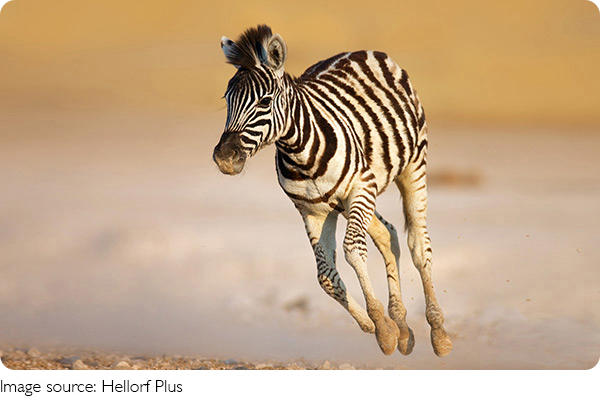
Unlike predators that often rest without immediate danger, zebras spend their lives as potential targets. Lions, spotted hyenas, leopards, African wild dogs, and even Nile crocodiles may hunt them depending on where they live.
Because attacks can happen with little warning, lying down for long periods would make escape slower and more difficult. Standing while sleeping allows a zebra to react within seconds if danger appears.
Tiny squirrels bury endless treasures! Their amazing memory helps them find hidden food again!
Why Declining Bee Populations Affect More Than Farms: Food Supply, Prices, and Nutrition
A close look at how hedgehogs manage food, shelter, traffic, and daily survival in urban spaces
How tiny wings keep a hummingbird still in the air, and why that takes such a huge energy budget
How emperor penguins rotate in freezing huddles to share warmth and survive harsh Antarctic cold
Their color shifts are mainly about signaling, temperature control, and light, not simple camouflage
This behavior is especially valuable in open habitats where predators may approach from a distance but can quickly close the gap once they begin an attack.
A zebra already on its feet needs only to become fully alert before running, while one lying flat must first stand, regain balance, and then accelerate. Those extra moments can determine whether the animal escapes or becomes prey.
The Herd Becomes a Shared Security System
Zebras rarely sleep alone. They usually remain within family groups or larger herds, where safety comes from cooperation rather than constant individual alertness.
While several animals rest, others remain awake and monitor the surroundings. These alert individuals watch for movement, listen for unusual sounds, and use their keen senses to detect approaching predators.
If danger is spotted, they immediately signal the rest of the group through vocal calls, body posture, and sudden movement.
Because many zebras are already standing, the entire herd can begin running almost simultaneously. This coordinated response greatly reduces the predator's chance of successfully isolating a single individual.
Living in groups also creates another advantage. A predator facing dozens of alert zebras has a much harder time selecting one target than when confronting an isolated animal.
How Can Zebras Sleep Without Falling?
Sleeping while standing requires a unique anatomical adaptation. Like their close relatives, horses, zebras possess a specialized support mechanism known as the stay apparatus. This system consists of tendons, ligaments, and joints that work together to stabilize the legs with very little muscular effort.
Once engaged, the limbs remain securely positioned without requiring continuous muscle contraction. Instead of actively balancing throughout sleep, the skeleton supports much of the body's weight. This adaptation conserves energy while allowing the zebra to rest without collapsing.
As soon as the animal becomes fully awake, the locking mechanism is released, enabling immediate movement. The stay apparatus is one of the key reasons zebras can combine rest with constant readiness.
Standing Sleep Is Not the Whole Story
Despite popular belief, zebras do not spend all of their sleeping hours standing. Like most mammals, zebras require periods of rapid eye movement (REM) sleep. During this stage, the brain performs important restorative functions that cannot be fully achieved while standing.
To enter REM sleep safely, zebras usually lie down on the ground. However, this deeper sleep lasts only for relatively short periods because lying down increases vulnerability. Researchers observing wild zebras have found that deep sleep often occurs when the surrounding herd is calm and trusted companions remain alert.
If the environment becomes uncertain, zebras may postpone REM sleep until conditions improve. As a result, their daily rest consists of many short naps mixed with occasional deeper sleeping sessions rather than one long uninterrupted sleep period.
Every Resting Decision Depends on Safety
The location where zebras choose to sleep is almost as important as the way they sleep. They often rest in open areas where visibility is good and approaching predators can be detected early. Tall vegetation that could conceal hunters is generally less desirable because it limits reaction time.
Environmental conditions also influence sleeping behavior. During migration or when traveling between feeding grounds, zebras may take brief standing naps whenever opportunities arise instead of waiting for nighttime.
This flexible approach allows them to recover energy while continuing to move through landscapes where food, water, and predator activity constantly change.
Evolution Designed Zebras for Fast Escapes
Sleeping while standing is only one part of a much larger survival strategy. Zebras possess powerful leg muscles capable of producing explosive acceleration, allowing them to flee rapidly once danger is detected.
Their excellent hearing and wide field of vision help identify threats early, while their unpredictable running patterns make pursuit more difficult for predators.
Their distinctive striped coats may also create visual confusion when an entire herd runs together, making it harder for predators to focus on a single individual. Combined with group vigilance and specialized sleeping adaptations, these traits have helped zebras survive alongside powerful predators for countless generations.
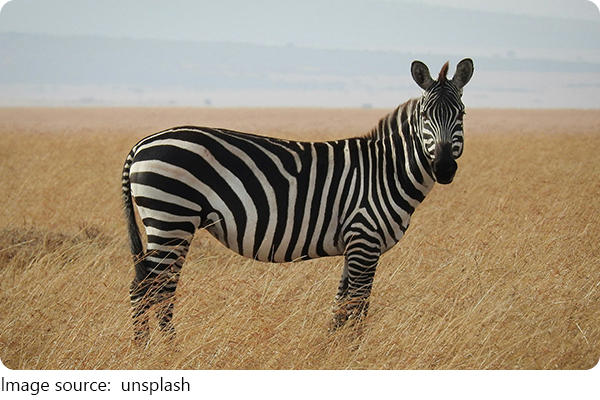
A zebra sleeping on its feet is far more than an unusual sight—it is a remarkable example of evolution solving a life-or-death challenge. By combining specialized leg anatomy, herd cooperation, brief sleeping cycles, and constant awareness, zebras manage to rest without sacrificing the ability to escape at a moment's notice.