Guardian of the Pride

Chris Isidore
| 20-09-2026
 · Animal Team
Lykkers, have you ever wondered what happens to a lion cub after it is born? Those tiny animals may look playful and helpless, but their early lives are carefully guided by their mothers and other females in the pride.
From feeding and shelter to play and learning, we can see a clear process that gradually prepares each cub for life.
A Safe Beginning
During the first weeks, cubs are too young to travel with the pride. A mother often keeps them in thick vegetation, among rocks, or in another sheltered place. She returns regularly to feed them and check their condition.
This quiet period gives the young animals time to grow stronger. Their eyes and movements develop gradually, and they become better at responding to sounds and nearby activity. The mother also has to balance caring for the cubs with meeting her own needs.
Why Does Lynx Have Ear Tufts? The Hidden Reasons Behind These Unique Ears Reveal Nature’s Amazing Design!
The fascinating biology behind one of the rhinoceros’s most distinctive features
Discover the habitat, appearance, diet, nesting behavior, breeding cycle, and family life of these graceful water birds
Leopards at Night: Their Incredible Hunting Skills Reveal a Hidden World of Speed, Patience, and Natural Intelligence!
How Do Polar Bears Survive The Freezing Arctic? Their Amazing Natural Outfit Reveals A Hidden Survival Secret!
How Humpback Whale Mothers Protect Their Calves With Gentle Care and Reveal Amazing Bonds Beneath Ocean Waves!
Shared Family Care
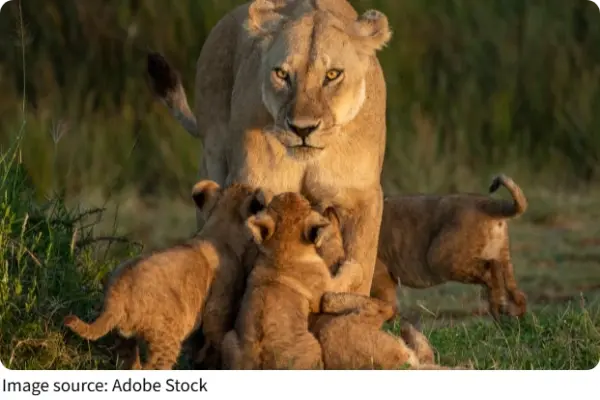
Lionesses in the same pride can cooperate in raising young. Several females may stay near the cubs, and a nursing lioness can sometimes feed a cub that is not her own.
This shared care gives the young more opportunities to receive attention and nourishment. It also means that a cub can observe several experienced females. We can see this cooperation as an important part of pride life.
From Milk to Solid Food
Milk is especially important during the earliest stage. As the cubs grow, they gradually become interested in solid food. Their teeth become stronger, and they begin to watch older lions while they feed.
At first, young cubs have limited control over their movements. They need time to learn how to approach food, chew it, and move around the group safely. Each experience helps them become more capable.
Protection From Danger
A lioness spends a great deal of attention keeping her young safe. She stays alert to unfamiliar animals and sudden changes nearby. When several females are together, they can share the responsibility of watching the surroundings.
If danger approaches, the females may respond as a group. This cooperation gives small cubs a better chance of staying protected while they are still unable to defend themselves.
Moving With Their Mother
Very young cubs cannot travel long distances, so a mother may carefully carry one when the family needs to change locations. She grips the loose skin at the back of the cub's neck and moves it gently.
As the cubs grow stronger, they begin walking beside their mother. This change is important because they gradually move from complete dependence toward greater physical ability.
Play Becomes Practice
Lykkers, here is one detail we may easily overlook: when cubs chase, jump, hide, or wrestle, they are also learning.
Play helps young lions improve balance, timing, coordination, and body control. A short chase can teach them how quickly another animal moves. A playful pounce helps them understand distance. Even simple wrestling helps build confidence and physical control.
Watching and Learning
Young lions learn a great deal by following experienced members of the pride. They watch how mothers move, rest, search for food, and react to changes around them.
Instead of learning everything at once, cubs gain skills step by step. They first observe, then imitate, and finally begin trying things independently. This gradual process helps them develop naturally.
Growing More Independent
As cubs approach their second year, they become stronger and more confident. They can travel farther, handle solid food more easily, and take part in more of the pride's daily activities.
Young females often remain connected with their birth group, while young males may later leave and seek opportunities elsewhere. By this stage, the lessons learned during childhood have already shaped many of their abilities.
A Motherhood Built on Care
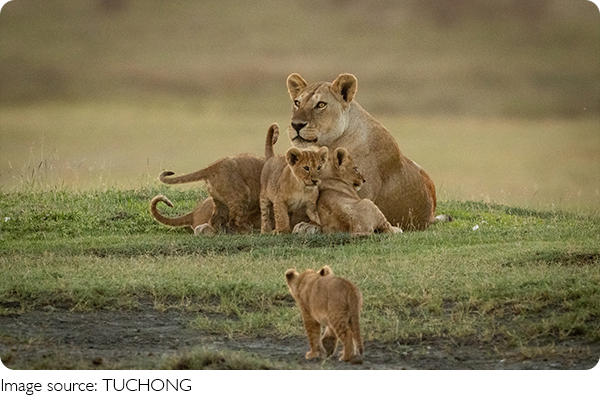
When we look closely at lioness motherhood, we see much more than just feeding a young animal. We see shelter, shared care, protection, movement, play, observation, and gradual learning.
Lykkers, if you could spend one day observing a lion pride, which moment would you choose: newborn cubs staying close to their mother, playful youngsters practicing new skills, or older cubs beginning to follow the pride? Each stage shows us how patience and cooperation can help young animals grow into capable members of their family.
Lion Mother Keeps Cubs Safe From Predator | Born In Africa
Video by Nat Geo Animals