Lemurs: Wild Diversity

Pankaj Singh
| 02-09-2026
 · Animal Team
Lemurs are a diverse group of primates distinguished by their varied appearances, agile movements, and specialized lifestyles.
Native to Madagascar, they inhabit environments ranging from humid forests to dry woodland and scrubland.
Their differences in behavior, feeding habits, movement, and social organization reflect the remarkable ways animals adapt to their surroundings.
Remarkable Diversity
Lemurs differ widely in size, coloring, body shape, and behavior. Their coats may appear gray, brown, reddish, black, or white, with some species featuring distinctive patterns.
Physical characteristics are closely connected to lifestyle. Species that spend much of their time in trees have adaptations suited to climbing and leaping, while those that frequently travel on the ground have different movement strategies. Their limbs, hands, feet, teeth, and tails support activities such as feeding, climbing, grooming, and navigating their surroundings.
Your Cat May Not Need Extra Warmth! Simple Winter Care Mistakes We Often Make Without Realizing It!
Why Do Macaws Form Lifelong Bonds and Learn to Copy Human Speech?
Discover how sea otters thrive in coastal waters through unique adaptations, feeding skills, and tool use
With pups and mothers calling everywhere, one familiar sound can guide a pup home!
Brushing, bathing, and simple mat-prevention tips for a soft, healthy coat!
Discover why cats seek elevated spaces and how to create safe, comfortable perches at home
Life in Different Habitats
Lemurs occupy several types of natural environments, including humid forests, dry forests, and scrubland. Each habitat provides different sources of food, shelter, and opportunities for movement.
Species that live mainly in trees navigate branches and canopy spaces with considerable agility. Others spend more time on the ground, where they travel between feeding and resting areas. These contrasting lifestyles allow lemurs to make use of different parts of their environment.
Flexible Feeding Habits
Lemur diets vary according to species, habitat, and seasonal conditions. Depending on the species, they may feed on fruit, leaves, flowers, seeds, nectar, insects, and other small invertebrates.
This flexibility enables different species to use a broad selection of available resources. Fruit-eating lemurs can also disperse seeds as they move between feeding areas, connecting their feeding habits with the growth and distribution of plants.
Communication and Social Life
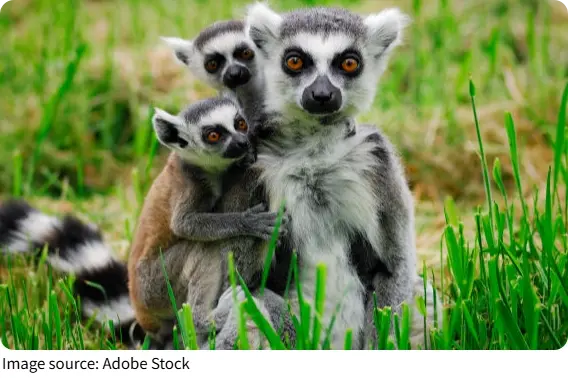
Lemur social behavior ranges from living in organized groups to more solitary lifestyles. Among social species, individuals interact through grooming, movement, vocalizations, scent, and body signals.
Grooming can help maintain relationships between group members, while vocal calls allow individuals to communicate across their surroundings. Scent marking is another form of communication used by certain species, providing information about presence and territory.
Together, these behaviors help lemurs coordinate activities and respond to the conditions around them.
Built for Movement
Movement differs substantially between lemur species. Arboreal lemurs can climb, walk along branches, and leap between surfaces, while more ground-oriented species are adapted for efficient travel across terrestrial environments.
Their tails contribute to balance and body control, particularly during movement through elevated areas. Unlike a grasping limb, a lemur's tail is generally not prehensile, so it cannot be used to hold branches or objects.
Growing Up
Young lemurs develop according to the needs of their particular species. Parental care can include carrying young animals, protecting them in suitable locations, and helping them remain close to adults during their early development.
As they mature, young lemurs gradually improve their ability to climb, travel, find food, and interact with others. These developing skills prepare them for the demands of life within their habitat.
A Role in the Ecosystem
Lemurs interact with plants and other organisms throughout their daily activities. Species that consume fruit can transport and disperse seeds, helping plants spread through their environment.
Their feeding behavior also connects them with flowers, leaves, nectar, and other natural resources. Through these interactions, lemurs participate in ecological processes that help shape the communities around them.
A Remarkable Primate Group
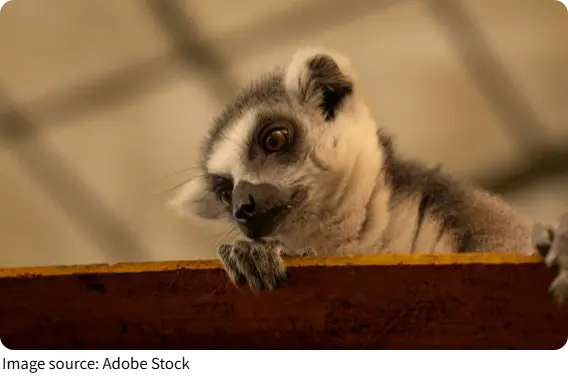
Lemurs demonstrate how closely an animal's lifestyle can be connected to its environment. Their differences in appearance, feeding, communication, movement, and social behavior allow individual species to occupy distinct roles within their habitats.
From agile canopy dwellers to species that regularly travel across the ground, lemurs represent an extraordinary range of natural adaptations. Their diversity makes them a fascinating group to observe and understand.