Kluane: Wild Yukon Escape

Chris Isidore
| 23-10-2026
 · Travel Team
Hello, Lykkers! Most people think of Banff when they picture a Canadian mountain park, but Kluane National Park and Reserve in the Yukon is a different beast altogether.
It's bigger, emptier, and far rougher around the edges. You don't come here for a gondola ride or a hot spring; you come for raw space and the chance to see a landscape that hasn't changed much in ten thousand years.
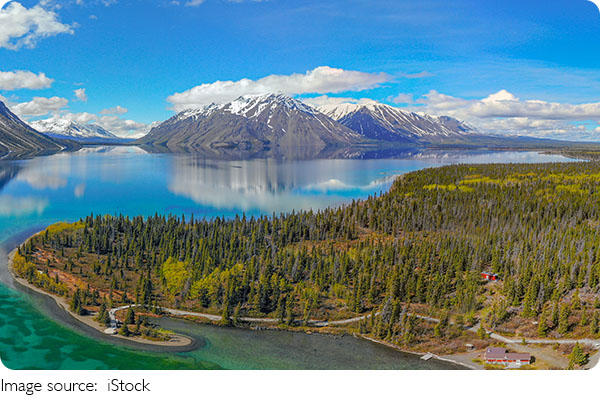
Why this park feels different
Kluane covers over 22,000 square kilometers, which makes it larger than some small countries. But here's the thing most visitors miss: the park is not a polished destination, it's a wilderness preserve. Only a handful of roads touch its edge, and the interior is dominated by ice fields, including the massive Kluane Icefield that feeds hundreds of glaciers.
Plan Lagoa do Fogo around clear viewpoints, a four-hour trail, seasonal shuttles, and practical transport choices.
A quiet hilltop escape with big views and a rotating café
Cross the Saar, see the views, and skip the crowds at this overlooked spot.
Caesar's temple to Venus still stands in the Forum, but most visitors walk right past it.
Where can one blue-green lake turn a mountain hike into the highlight of Slovakia?
What to know before tackling a demanding mountain route in northern Streymoy
You'll notice the silence almost immediately. No highway hum, no crowds, just wind and the occasional snap of a glacier calving. Mount Logan, Canada's highest peak at 5,959 meters, sits right here, and you can see its glaciated summit from the air on a clear day.
What to actually do out here
You won't find many marked trails, but that's the point. The most accessible route is the King's Throne Trail, a steep 12-kilometer round trip that climbs above Kathleen Lake. The payoff is a dramatic amphitheater of rock that looks like a giant's chair, and you'll likely have it to yourself. For something flatter, the Dezadeash River Trail offers a gentle wander through boreal forest and marsh, where you might spot a moose at dusk.
If you want to get deeper, book a flightseeing tour over the icefields. A half-hour floatplane ride from Haines Junction costs around 250 USD per person, and it's worth every cent for the view of crevasses and seracs you'd never reach on foot.
Kluane National Park and Reserve
Wildlife spotting without the crowds
The park is famous for its grizzly bears, and you'll have a real chance of seeing one if you know where to look. The Sheep Mountain area near the north end is a reliable spot, especially in spring when bears graze on fresh vegetation. Dall sheep cling to the steep slopes above the highway, and you might catch a golden eagle circling overhead.
Bring binoculars, because most animals keep their distance. Also, carry bear spray and know how to use it; this is not a zoo, and the animals here have never learned to tolerate humans.
Plan your visit like a local
Getting to Kluane takes effort. You'll fly into Whitehorse, then drive 160 kilometers west on the Alaska Highway to Haines Junction, the park's gateway town. The drive takes about two hours, and the road is well-maintained but can be busy with truckers heading to Alaska. Aim for a visit between June and August, when the weather is mild and the days stretch past 18 hours.
Camping at Kathleen Lake costs around 20 USD per night, but you'll need to book through Parks Canada in advance. Fill your gas tank in Whitehorse, because services are sparse beyond Haines Junction, and pack layers; even in July, a cold front can drop the temperature to near freezing.
One practical tip that saves a lot of headaches: get your backcountry permit at the visitor center in Haines Junction before you head out. The staff there also give you a detailed trail conditions report, which matters more than any map. And don't skip the Kluane Museum of Natural History in town, it's a small place, but the exhibits on icefield ecology explain what you're looking at far better than any guidebook.

Kluane isn't a park you check off a list. It's a place that makes you feel small in the best way, where a two-hour hike can leave you breathless from more than just the altitude. Remember that the park rewards patience, not speed. Give it a few days, let the landscape settle into you, and you'll leave with a sense of scale that no postcard can capture. Worth the trip, every kilometer of the drive.