Joshua Tree Facts!

Mason O'Donnell
| 09-11-2026
 · Plant Team
Joshua trees are easy to recognize because of their unusual branches and clusters of pointed leaves. However, their appearance is only part of what makes them interesting.
These distinctive desert plants have slow growth, an unusual relationship with a tiny pollinating moth, and flowering habits influenced by environmental conditions. Here are seven fascinating facts that reveal what makes Joshua trees so special.
Joshua Trees Are Actually Yuccas
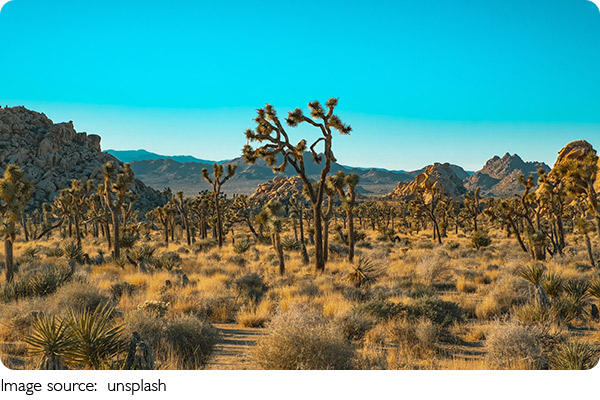
Despite their name and tree-like shape, Joshua trees belong to the yucca group of flowering plants. Their scientific name is Yucca brevifolia. They are native to the southwestern United States, particularly the Mojave Desert.
Unlike many familiar garden trees, Joshua trees have stiff, pointed leaves arranged in dense clusters at the ends of their branches. Their thick trunks and irregular branching patterns give them a distinctive silhouette that stands out across the desert landscape.
Want gorgeous blue blooms? Learn how to adjust soil conditions and turn pink hydrangeas blue!
Why do marguerite daisies bloom so beautifully? Try these simple tips for a colorful garden!
Curious about allium flowers? These simple growing tips can help create stunning blooms!
Want towering sunflowers? Learn how to grow giant blooms with the right soil, water, and sun!
Want baby’s breath to last longer? Try easy care tips that help preserve its delicate blooms
A practical guide to caring for this striking tropical houseplant and its distinctive, textured foliage
Their Branches Develop in Unusual Ways
Joshua trees do not usually form a broad, rounded canopy like many conventional trees. Instead, their branches extend in different directions, creating irregular shapes that become more complex as the plants mature.
Western Joshua trees generally begin branching after their first flowering, although growth can vary with environmental conditions and plant development. This gradual process means that individual trees can develop very different appearances, even when growing in similar surroundings.
They Grow Slowly and Can Live for a Long Time
Joshua trees are known for their slow growth and longevity. Their growth rate varies depending on rainfall, temperature, and other local conditions, so a young plant may take many years to develop the appearance of a mature specimen.
Some Joshua trees are believed to survive for centuries, although precise ages are challenging to establish. Their long lives make protecting established plants particularly important.
A Tiny Moth Helps Them Reproduce
One of the most remarkable facts about Joshua trees is their close relationship with specialized yucca moths. These small insects transfer pollen between flowers, allowing the plants to produce seeds. The relationship benefits both species. The moth lays its eggs in the flowers, and its developing larvae feed on some of the seeds. The plant can still produce seeds for future growth, while the moth gains a place for its young to develop.
Their Flowers Do Not Appear Every Year
Many garden plants bloom on a fairly predictable seasonal schedule, but Joshua trees are less consistent. Their flowering depends on environmental conditions, including rainfall and temperature. When conditions are favorable, mature plants produce clusters of creamy-white flowers that stand out against their stiff foliage. The blooms can appear in late winter or spring, but flowering may be limited or absent in other years.
Their Natural Home Has Special Soil Conditions
Joshua trees are adapted to dry desert environments, where water is limited, and the soil often contains sand, gravel, or other coarse materials. These conditions allow water to drain away rather than remain around the roots for extended periods.
Although the plants tolerate drought once established, young seedlings need suitable moisture and protection to survive. Favorable growing conditions are especially important during the early stages of development. For gardeners, this means planting a Joshua tree in heavy, waterlogged soil may be difficult. A sunny location and effective drainage are important considerations when cultivating this desert species.
7. They Support Other Desert Species
Joshua trees contribute to the surrounding ecosystem in several ways. Their branches can provide nesting places for birds, while their trunks and the spaces beneath them offer shelter for various small desert creatures. Their seeds also form part of the food resources used by certain small mammals. These interactions show that Joshua trees are more than distinctive landscape features: they help provide the structures and resources that other species need.
Joshua trees combine unusual shapes, slow growth, unpredictable flowering, and a specialized pollination relationship that makes them particularly interesting among desert plants. Their ability to thrive in dry environments does not mean they grow without challenges; successful reproduction and seedling establishment depend on suitable conditions.
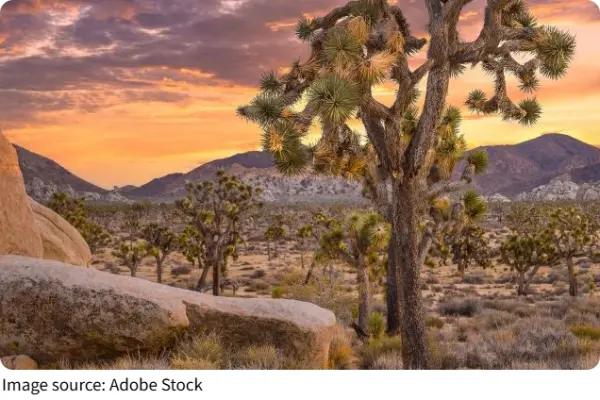
From their branching structure to their role in supporting desert life, these plants offer plenty of reasons to appreciate the complexity of natural ecosystems. Understanding their needs and unique characteristics also helps explain why protecting their native habitat matters.