Ancient Blooms Revealed

Owen Murphy
| 20-10-2026
 · Animal Team
Flowering plants are now among the most widespread forms of vegetation on Earth, but their rise was not necessarily as late as scientists once believed.
A remarkable collection of fossils from New Mexico suggests that these plants had already developed complex forest communities and produced relatively large seeds and fruits long before a major extinction event reshaped the planet. The evidence offers a fresh perspective on how ancient forests developed and how flowering plants diversified over time.
A Forest Preserved in Volcanic Ash
The discovery comes from a fossil deposit known as Dori’s Tuff, part of the Jose Creek Formation in New Mexico. Researchers estimate that the material dates to approximately 74.6 million years ago, placing it in the Late Cretaceous period.
Want to help an injured wild animal? Learn why expert advice matters before stepping in to rescue!
Scientists have discovered a remarkable golden coral that belongs to an entirely new family of marine life.
Could painting wind turbines help protect birds? A new study reveals a promising way to reduce deaths!
Artificial nests are offering Hong Kong's endangered cockatoos safer homes while revealing fascinating details about their behaviour.
A rare wildlife milestone! Two Przewalski's horse foals arrive in Kazakhstan after two centuries!
What fills a parus major's diet? From caterpillars to seeds, uncover its favorite foods through the seasons!
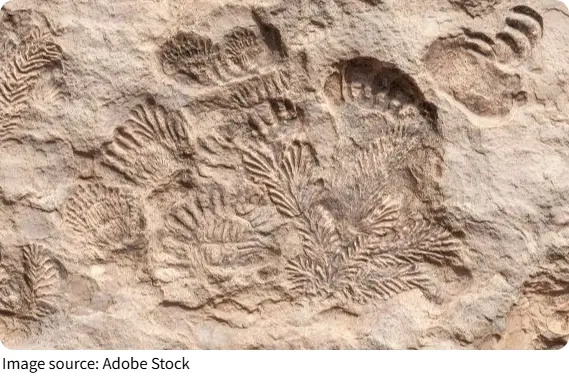
A volcanic eruption covered the area with ash, preserving an unusually detailed record of the surrounding vegetation. Unlike many fossil deposits that collect plant remains transported by rivers or deposited in lakes, this site captures much of an ancient landscape in its original arrangement.
The ash layer extends for about 1.2 kilometers, allowing researchers to examine plant remains across a substantial section of the former forest. Thousands of fossilized leaves, flowers, seeds, fruits and other plant materials provide clues about the community that existed before burial.
Because the ash settled relatively quickly, the deposit offers something close to a snapshot of an ancient ecosystem. Researchers can study how different plants grew together rather than relying only on isolated specimens collected from unrelated locations.
Flowering Plants Were Already Thriving
Flowering plants, scientifically called angiosperms, first appeared much earlier in Earth's history, around 135 million years ago. Early representatives were often relatively small and produced seeds that could disperse with little assistance.
Scientists had commonly considered the later Cretaceous period a time when many flowering plants were still limited in their ecological influence. According to this interpretation, their widespread dominance developed substantially after the extinction event around 66 million years ago.
The New Mexico fossils challenge that simplified timeline. The preserved community included flowering trees with substantial trunks, including relatives of laurels and palms. They grew alongside older plant groups, such as ferns and conifers.
The evidence indicates that flowering plants had already become important components of at least some forest environments well before the end of the Cretaceous. It does not mean every region supported the same vegetation, but it shows that ancient plant communities could be more developed and varied than earlier interpretations suggested.
Seeds and Fruits Reveal a Major Difference
One of the study's most notable observations concerns the size of seeds and fruits. Botanists often use the term diaspore for a seed and the associated structures that help it spread to new locations.
At many other Late Cretaceous fossil sites, these structures were typically about the size of a tiny seed. In the New Mexico deposit, their average size was closer to that of a large blueberry. Researchers reported that the difference represented more than a hundredfold increase in volume.
The fossil collection contained nearly 80 distinct types of these structures, including several measuring about an inch in length. Such diversity suggests that flowering plants were already developing a broad range of reproductive strategies.
Producing larger seeds and fruits can require greater investment of a plant's resources. Larger reserves may support early growth, while the structures surrounding seeds can influence how they are dispersed. The fossils therefore provide useful evidence about the ecological strategies that had emerged by this stage of Earth's history.
What the Evidence Means for Plant Evolution
The study, published in Science on June 25, 2026, was led by Jaemin Lee and involved researchers from the University of California, Berkeley, and other institutions. Its findings challenge the idea that the later dominance of flowering plants depended primarily on ecological changes following the end-Cretaceous extinction. At least in the New Mexico forest, substantial reproductive diversity was already present millions of years earlier.
However, the fossils cannot establish exactly why larger seeds and fruits developed. Several environmental and ecological influences may have contributed, and different plant groups may have followed different evolutionary paths. Additional evidence from other fossil sites will help researchers determine how widely these patterns occurred.
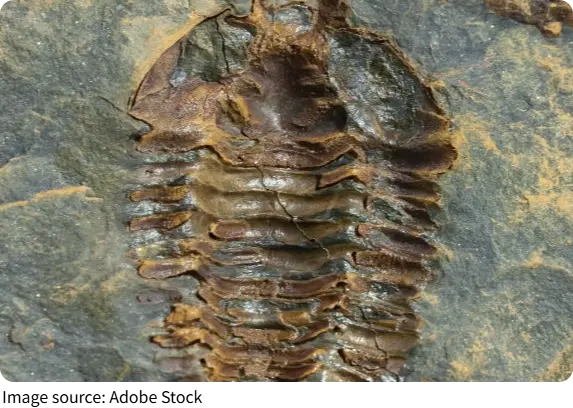
The New Mexico fossil deposit offers a valuable glimpse into a forest that existed approximately 74.6 million years ago. Rather than providing a complete explanation for the rise of flowering plants, the evidence refines the timeline and raises new questions about their evolution. Further discoveries may reveal how widespread these early forest communities were and which environmental conditions helped shape the remarkable diversity of flowering plants seen today.