Color & Furniture That Work

Caleb Ryan
| 27-11-2026
 · Lifestyle Team
Welcome back. Plenty of modern rooms get painted in a single safe white and filled with neutral furniture, and they end up feeling like a showroom nobody lives in.
The rooms that actually read as designed do the opposite: they pick a color story first, then choose furniture that supports it, and they let one or two pieces carry real weight.
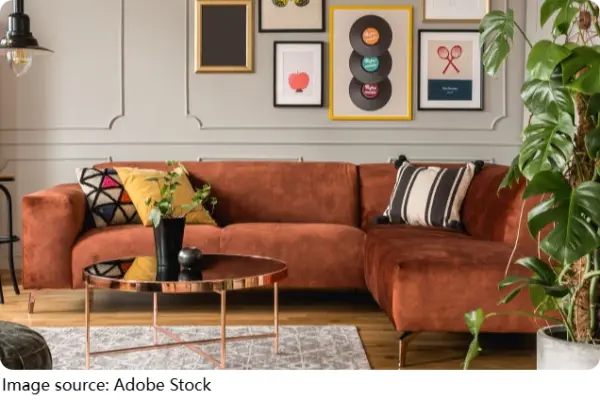
Pick a color anchor first
You want a color that repeats at least three times in the room, in different materials. A deep olive on the wall, a matching olive cushion on the sofa, and a ceramic vase on the shelf. That repetition is what makes a palette feel intentional rather than accidental. Designers often build around a 60-30-10 split: roughly 60 percent dominant tone, 30 percent secondary, 10 percent accent. A living room in warm off-white walls, a camel leather sofa, and a single rust-red armchair follows that math without looking calculated.
Soft furnishings do more for a relaxed living room than any renovation, and the fixes are cheap.
Pick pieces that look good and survive daily life, not just the showroom photo.
Layout and color choices that separate a polished room from a flat one, with details you can actually copy.
A bench can anchor a living room better than another chair. Here is how to place it, style it, and keep it useful.
Clean lines, low furniture, and a tight color plan do more for a modern living room than any single statement piece.
Furniture, Lighting, and Color Choices That Turn a Bedroom Into a Genuinely Restful Space.
Let one piece lead the room
Do not furnish a modern space with six pieces of equal visual weight. Pick a lead item, an Eames lounge chair, a sculptural floor lamp, a low walnut sideboard, and let everything else step back. The lead piece gives the eye somewhere to land. In smaller apartments this matters even more: a single bold sofa in a strong color can carry an entire open-plan studio, while four mid-tone pieces will just blur together.
Texture does the quiet work
Color gets the credit, but texture is what keeps a modern room from feeling flat. Pair a matte wall with a boucle chair, a glossy lacquer cabinet with a linen curtain, a wool rug with a glass coffee table. The contrast between surfaces reads as depth even when the palette is nearly monochrome. A room done entirely in white works only when the white comes in at least four finishes: flat paint, brushed cotton, honed stone, and raw plaster.
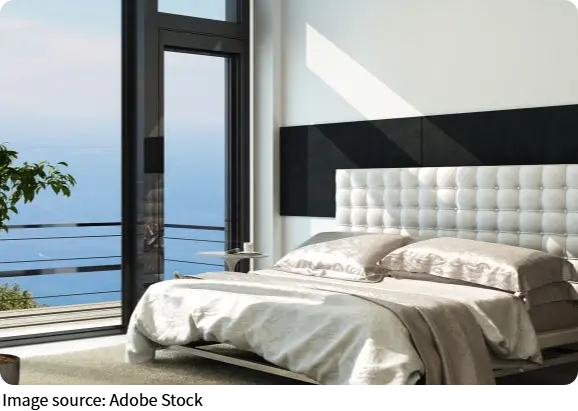
Ground it with proportion
Furniture scale decides whether a color scheme holds up. A 2.4-meter sofa against a 3-meter wall leaves breathing room; the same sofa crammed into a 2.6-meter alcove makes any palette feel tight. Keep 45 to 60 centimeters of walkway between major pieces, and let rugs extend at least 20 centimeters past the sofa edge. These numbers are boring and they matter more than the paint chip you spent a weekend choosing.
Use negative space on purpose
Modern design leans on emptiness. Leave one wall bare, keep the top of the sideboard clear except for two objects, resist filling every corner. A room with a deliberate empty zone reads as considered. A room with something in every corner reads as storage. That single cleared surface often does more for the design than another cushion ever will.
Color and furniture are a two-part decision, and the rooms you remember are the ones where they were made together. Pick your anchor color, choose one piece to lead, then step back and let the empty space do its share. Next time you walk into a room that feels off, check the palette repetition and the scale before you blame the paint.