From Birth to Predator!

Liam Reilly
| 24-09-2026
 · Animal Team
Hi Lykkers! A baby cheetah enters the world as one of nature’s most vulnerable predators. Despite being among the fastest land animals on Earth, a newborn cheetah begins life unable to hunt, defend itself, or survive without its mother. The journey from a helpless cub to a skilled hunter is filled with challenges, learning, and remarkable transformations.
Unlike many big cats, cheetahs rely on speed rather than strength. Their lightweight bodies, long legs, flexible spines, and specialized claws are built for short bursts of acceleration.
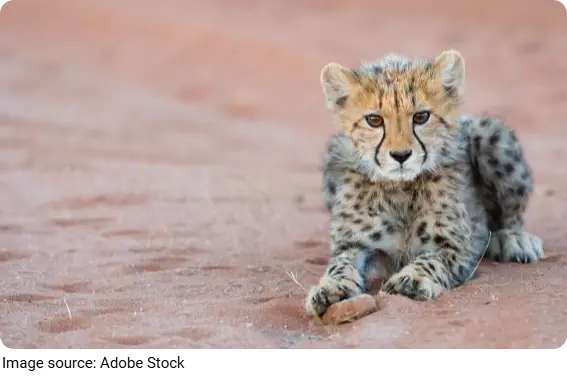
The First Weeks: Survival Depends on the Mother
Newborn cheetah cubs are extremely small, usually weighing only about 250 to 300 grams. Their eyes remain closed during the first one to two weeks, leaving them completely dependent on their mother. They spend most of their early days sleeping and nursing, gaining strength through their mother’s milk.
How do they survive anywhere? Meet the clever climbers mastering city and forest life!
Why Do Meerkats Always Stand Tall? The Desert Habit Behind Their Famous Pose Will Change How We See Them!
Eurasian Red Squirrel: The Tiny Forest Flame With Amazing Tree Skills And A Secret Life Among Branches!
Easy Ways We Can Create a Cozy Home Our Cats Will Love and Feel Comfortable In Every Single Day!
Why Do Giraffes Sleep Only Two Hours Daily? The Surprising Secrets Behind Their Amazing Resting Habits!
Why Does the Blue Wildebeest Look Like Several Animals Combined? Discover Its Remarkable Grassland Journey!
One of the most distinctive features of young cheetahs is the thick, grayish fur that extends from their head along their back. This mantle helps camouflage cubs among dry grass and vegetation. Scientists believe the unusual appearance may also provide protection by making them resemble animals with a more aggressive reputation, such as the honey badger. As the cubs grow, this special coat gradually becomes shorter and less noticeable.
The first months are the most dangerous stage of a cheetah’s life. Lions, hyenas, leopards, and other predators can easily overpower young cubs. Unlike larger cats, cheetahs are not built for fighting. Their survival depends heavily on their mother’s ability to hide them, move them between different locations, and avoid attracting attention from threats.
Growing Through Play and Exploration
Around four to six weeks old, cheetah cubs begin exploring outside their hiding place. Their movements become more confident, and their curiosity begins to drive them to investigate the world around them. Play is a crucial part of their development. Chasing siblings, pouncing on objects, wrestling, and practicing sudden movements are not simply entertainment; they are early lessons for future hunting.
Through these activities, cubs develop coordination, balance, and reaction speed. A successful cheetah hunt requires much more than running quickly. The animal must judge distance, approach quietly, choose the right moment to attack, and control its movements during a high-speed chase.
Learning the Art of Hunting
A mother cheetah serves as both protector and teacher. Young cubs observe her hunting behavior and gradually understand how experienced hunters make decisions. They watch how she selects prey, uses vegetation for concealment, and prepares for a chase.
At first, cubs practice by chasing each other or attempting to catch small moving objects. Later, they accompany their mother during real hunting attempts. These experiences teach them that speed alone does not guarantee success. A poorly timed chase can waste energy and leave the cheetah vulnerable to competition from other predators.
By approximately six months old, cubs have developed stronger muscles and improved coordination. Their playful attacks become more realistic, preparing them for the challenges they will face when they eventually leave their mother’s care.
The Path Toward Independence
Young cheetahs usually stay with their mother for about 18 months before becoming independent. During this period, they continue to improve their hunting techniques and learn to navigate their environment. When they separate from their mother, their future lifestyle depends partly on their gender and social behavior.
Young males often remain together with their brothers in groups called coalitions. These partnerships can help them defend territory and compete for opportunities. Females generally become more solitary, later raising their own cubs and repeating the cycle of survival. The transition from a dependent cub to a capable hunter requires patience. Many young cheetahs do not survive due to predation, limited food availability, and environmental changes.
The Life of a Skilled Predator
A fully grown cheetah is one of the most specialized hunters in the animal kingdom. Its body is perfectly designed for short bursts of incredible speed rather than long battles. A cheetah can reach speeds of up to 100 kilometers per hour during a chase, but can maintain this pace only for a short distance.
Hunting begins with careful observation. A cheetah usually approaches its target slowly, keeping its body low and using grass or terrain features as cover. Once it gets close enough, it launches a rapid pursuit of prey such as gazelles, impalas, and other small antelope species. A successful chase requires precise timing because running at maximum speed consumes enormous energy. Even after capturing prey, a cheetah must remain alert.
Protecting Future Generations of Cheetahs
The journey of a baby cheetah is closely tied to the species' conservation. Habitat destruction, declining prey populations, and conflicts between humans and wildlife have reduced cheetah numbers in many regions. Protecting young cheetahs requires preserving natural habitats where mothers can safely raise their cubs. Conservation efforts focus on maintaining open landscapes, supporting research, and creating solutions that allow humans and cheetahs to share the same environment.
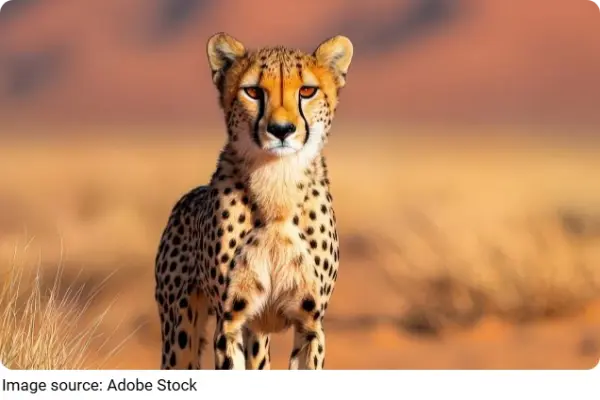
The story of a baby cheetah is far more than a tale of becoming a fast hunter. It is a journey built on maternal protection, playful learning, careful observation, and countless survival lessons. From a tiny cub hidden in the grass to a powerful predator racing across the savanna, every stage reveals the incredible adaptation of one of nature’s most specialized animals.