Why Do Seals Cry?

Santosh Jha
| 20-09-2026
 · Animal Team
Good to see you, Readers! Have you ever watched a seal resting on a beach and noticed what looks like tears running down its face? The sight can be surprisingly emotional, especially when the animal remains still on the sand.
Its watery eyes may make it seem as though the seal is quietly crying. But are seals actually sad, or is there a fascinating biological reason behind those mysterious tears?
The answer is far more fascinating than simple emotion. What looks like crying is usually connected to the way a seal's eyes are protected and maintained, particularly when the animal leaves the water. Its tears are part of a sophisticated biological system that keeps the eye's surface functioning in an environment that can be dry, windy, salty, and filled with sand particles.
Chimpanzees can remember familiar faces after decades apart, showing a surprising social memory once thought unique to humans!
One bird, one human, two visions! The hidden power behind an eagle’s sharp sight.
Simple signs to spot a bright, lively kitten before bringing one home
What first-time bird keepers should know before bringing home a chirpy little roommate
Essential Daily Tips for Nutrition, Grooming, Activity, Safety, and Veterinary Care
A close look at how hedgehogs manage food, shelter, traffic, and daily survival in urban spaces
Seals Really Do Produce Tears
Seals have functional tear glands, just like many other mammals. Their eyes constantly produce a thin layer of fluid that covers the cornea and keeps the exposed surface moist. This tear film has several jobs. It helps prevent the cornea from drying out, supplies nutrients and oxygen to the outer eye, washes away tiny particles, and provides a degree of protection against microorganisms.
When a seal is swimming, water surrounds much of its body, but that does not mean its eyes can simply rely on seawater for lubrication. Seawater contains a high concentration of salts and other dissolved substances, while the tear film has a carefully controlled chemical composition. The seal therefore still needs its own tear production to maintain the eye. When the animal comes ashore, the difference becomes much easier to notice.
Why Tears Become More Visible on Land
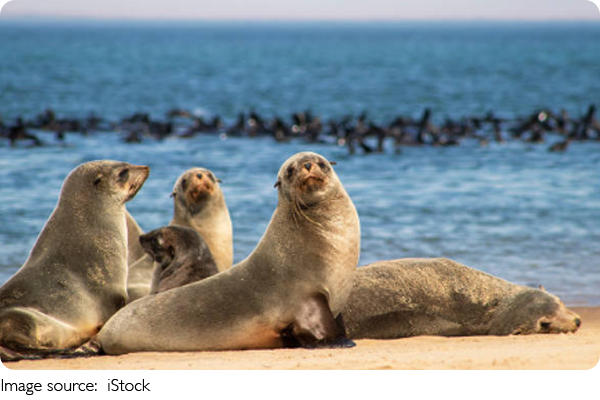
A seal's watery eyes can look especially dramatic when it is resting on a beach, rock, or ice. On land, the eye is exposed directly to the surrounding air. Wind can increase evaporation from the tear film, while sunlight, dry air, dust, and sand can place additional stress on the exposed surface. The seal's tear system helps compensate for these conditions.
Some species also have prominent frontal features and large eyes, making moisture around the eyelids particularly noticeable. As tears accumulate, they can collect at the corners of the eyes and flow down the face.
Because seals have relatively smooth face surfaces, the liquid may form clearly visible trails. That does not necessarily indicate distress. A seal with wet cheeks may simply be maintaining its eyes in exactly the way its physiology requires.
The Third Eyelid Adds Extra Protection
One of the most interesting features of a seal's eyes is the nictitating membrane, sometimes called a third eyelid. This thin, translucent membrane can move across the eye and provide additional protection without completely blocking vision. It is particularly useful for animals that regularly move between water and land.
For a seal, the membrane can help shield the cornea from physical irritation while the animal swims. It also contributes to keeping the eye surface moist. This adaptation is especially valuable because seals spend substantial portions of their lives in environments where the eyes encounter changing conditions. Underwater visibility, floating particles, sunlight reflecting from the surface, and exposure to air all create different demands.
Saltwater Is Not the Same as Tears
It is easy to assume that a seal's tears are simply seawater draining from its eyes, but that explanation is misleading. Tears are produced by specialized glands and contain water, electrolytes, proteins, lipids, and other substances that help maintain the eye's surface. The composition and function of tears are therefore different from ordinary seawater.
This distinction matters because the eye is highly sensitive. The cornea must remain transparent for clear vision, and its surface needs a stable environment. A seal’s tear film helps maintain that environment even as the animal moves between dramatically different surroundings.
Does Crying Mean a Seal Is Sad?
Not necessarily. Humans often associate tears with sadness, pain, relief, or other emotional experiences. In seals, however, visible tears should not automatically be interpreted as an emotional response. A seal can produce tears while appearing perfectly healthy and relaxed. Seeing moisture around its eyes is therefore not enough to conclude that the animal is frightened, lonely, grieving, or unhappy.
That does not mean seals lack emotions. Research on pinnipeds has documented complex social behavior, communication, learning, maternal care, and responses to their surroundings. The important point is that visible tearing alone is not reliable evidence of an emotional state.
When Eye Discharge Can Signal a Problem
There is an important distinction between normal tear production and unusual eye discharge. If a seal has persistent thick discharge, obvious swelling, severe redness, an injured eye, or difficulty opening the eyelids, those signs may indicate irritation, trauma, or disease rather than ordinary lubrication.
Wildlife professionals should handle such situations rather than members of the public attempting to approach or treat the animal. A seal resting on land may be there because it naturally needs to haul out, and getting too close can create unnecessary stress. The safest response is to observe from an appropriate distance and contact local wildlife authorities if the animal appears genuinely injured or seriously ill.
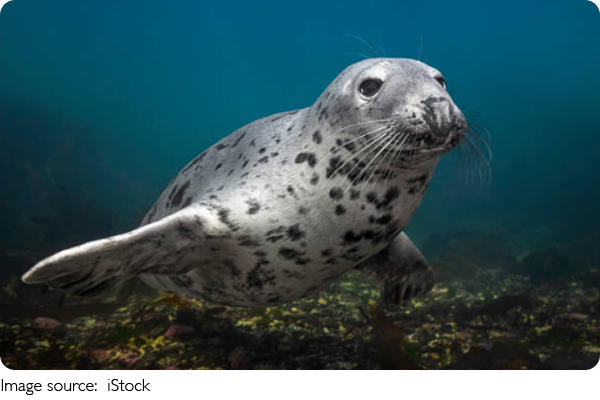
So, why do seals cry on land? Usually, what we interpret as crying is simply tear production doing its job. The seal's eyes need continuous protection, and being on land can make the resulting moisture much easier for humans to see.